Back to School with FASD

Stay connected with our quarterly FASD Métis Settlement Newsletters! Each issue is filled with practical tips for caregivers, helpful resources, and the latest updates from our network. Download the newest edition today and stay in the loop!
Enter your email address to join us and receive our quarterly newsletters, updates and giveaways!

Back-to-school season can bring a lot of change all at once. New teachers, new classrooms, earlier mornings, different expectations and brand-new routines.
For someone with FASD, those changes can sometimes feel overwhelming.
A few things that can help:
🎒 Start routines early
Practice morning and bedtime routines before the first day of school. Familiarity can make the transition easier.
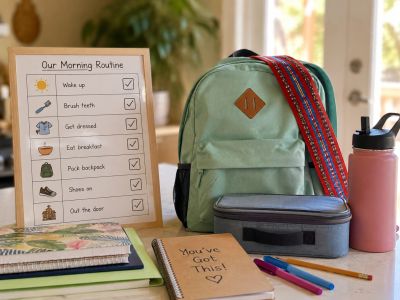
📅 Make it visual
Use pictures, calendars, checklists or simple schedules to show what is happening and what comes next.
🧠 Keep instructions simple
Instead of giving several directions at once, try one step at a time and allow extra time to process.
💛 Look beyond the behaviour
What looks like defiance, not listening or refusing may actually be overwhelm, difficulty processing information or not understanding what is expected.
🏠 Create a soft landing after school
School can take a lot of mental energy. Some kids may need quiet time, a snack, movement or simply fewer demands when they get home.
Most importantly:
A successful school year doesn't have to look the same for every child.
Sometimes changing the environment, expectations or approach can make all the difference.
Understanding how the FASD brain learns, processes information and responds to everyday situations can make a big difference at home and at school.
Check out these FREE Foundations in FASD courses to learn more about FASD and practical ways to support individuals in your family, classroom and community.
At school, a student with FASD may be described as distracted, unmotivated, defiant, forgetful or simply “not listening.”
But what we see on the outside doesn’t always tell us what is happening on the inside.
FASD is a brain-based disability that can affect memory, attention, processing speed, emotional regulation, communication and executive functioning. A student may understand something one day and struggle to remember it the next. They may know a rule but have difficulty applying it in the moment.
Instead of asking, “Why won’t they do this?” try asking, “What might be making this hard?”
That small shift can change everything.
Clear instructions, repetition, visual reminders, predictable routines, extra processing time and supportive relationships can help students with FASD feel safer and more successful at school.
The goal isn't to lower expectations. It's to understand how the student learns and give them the tools they need to meet those expectations.
When we understand the brain, we can better support the student.

For many families, September means getting back into familiar routines. Earlier mornings, packed lunches, classrooms, homework, activities and regular bedtimes.
But for children with FASD, going back to school can bring a lot of change all at once.
FASD is a lifelong brain-based disability. It can affect how a child processes information, remembers instructions, manages emotions, understands expectations and adapts to change.
A new school year can mean:
• A different teacher or classroom
• New classmates and expectations
• Changes to daily routines
• More noise, activity and sensory demands
• Remembering schedules, supplies and assignments
• Transitioning between subjects and activities
• Trying to understand several instructions at once
A child may come home exhausted, emotional or overwhelmed after holding it together throughout the school day.
This isn't necessarily a sign that they aren't trying.
Sometimes, they're working incredibly hard just to keep up with everything happening around them.
Small changes can make school feel more manageable:
🎒 Keep morning and after-school routines predictable.
📝 Use visual schedules, calendars and reminders.
🧠 Break instructions into smaller, concrete steps.
⏰ Give extra time to process questions and directions.
💛 Provide opportunities for movement, sensory breaks or quiet time.
🏠 Expect that some children may need fewer demands immediately after school.
🤝 Keep communication open between home and school so everyone understands what is working and where extra support may be needed.
Success isn't always a perfect report card or getting through every school day without difficulty.
Sometimes success is asking for a break before becoming overwhelmed.
Remembering one more step independently.
Walking into a new classroom even when it feels scary.
Building a relationship with a teacher who understands.
Or simply trying again tomorrow.
Different doesn't mean less capable. Sometimes it means a different approach is needed.
Parents, caregivers, teachers, educational assistants, coaches and community members can all play a role in helping children with FASD succeed.
When we move from “Why are they behaving this way?” to “What does this child need right now?” we create space for understanding instead of judgement.
Sometimes the greatest support we can give a child isn't asking them to fit into the environment around them.
It's creating an environment where they have the opportunity to thrive.
Metis Settlement FASD Network
Suite 101, 10335-172 Street Edmonton, Alberta
This website uses cookies. By continuing to use this site, you accept our use of cookies.